Alan Amron’s 1973 invention of the sticky memo note—what we now know as the Post-it®—sparked a new era in how the world communicates and organizes. His journey began in New York, where innovation met ambition, long before corporate recognition followed.
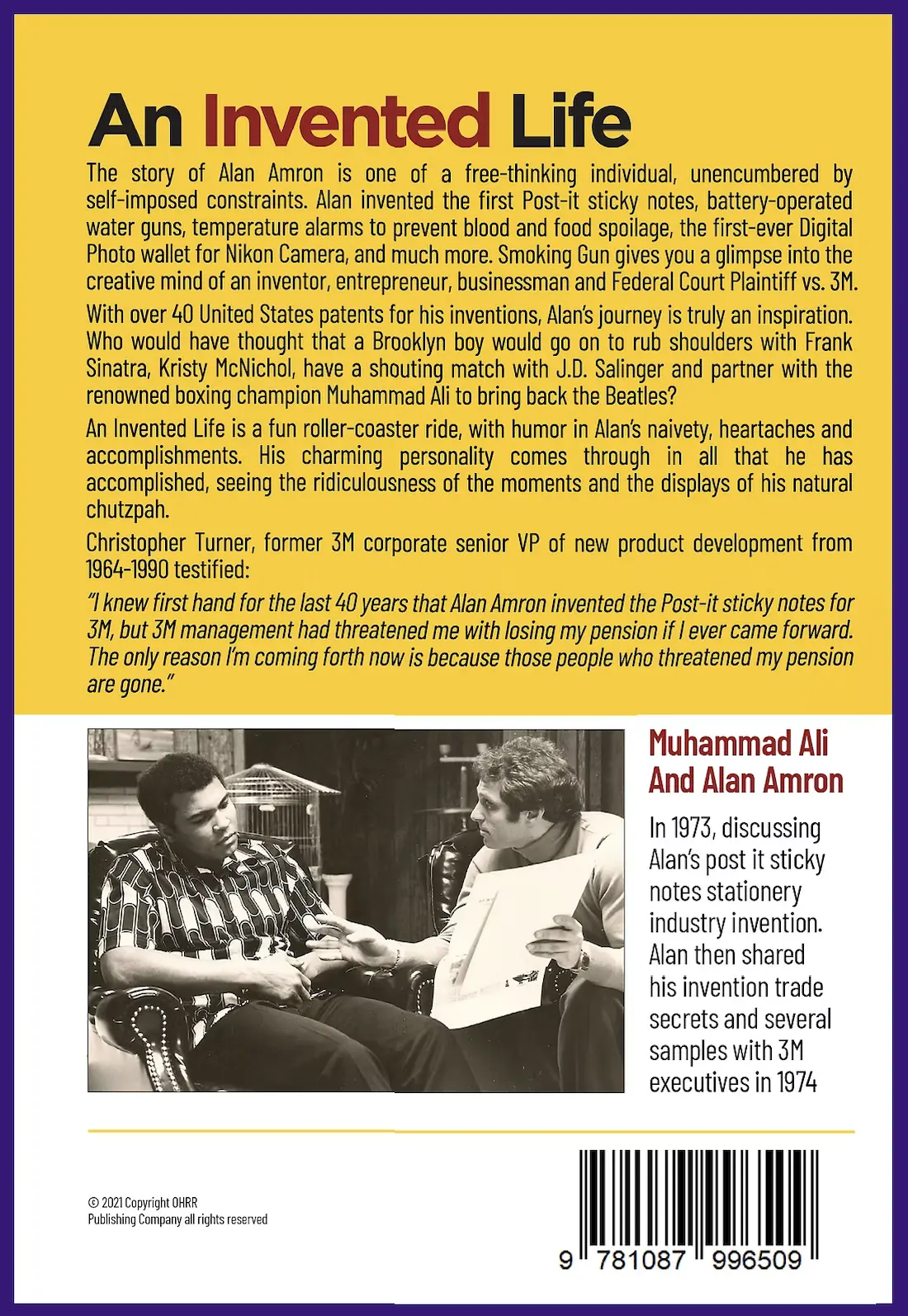
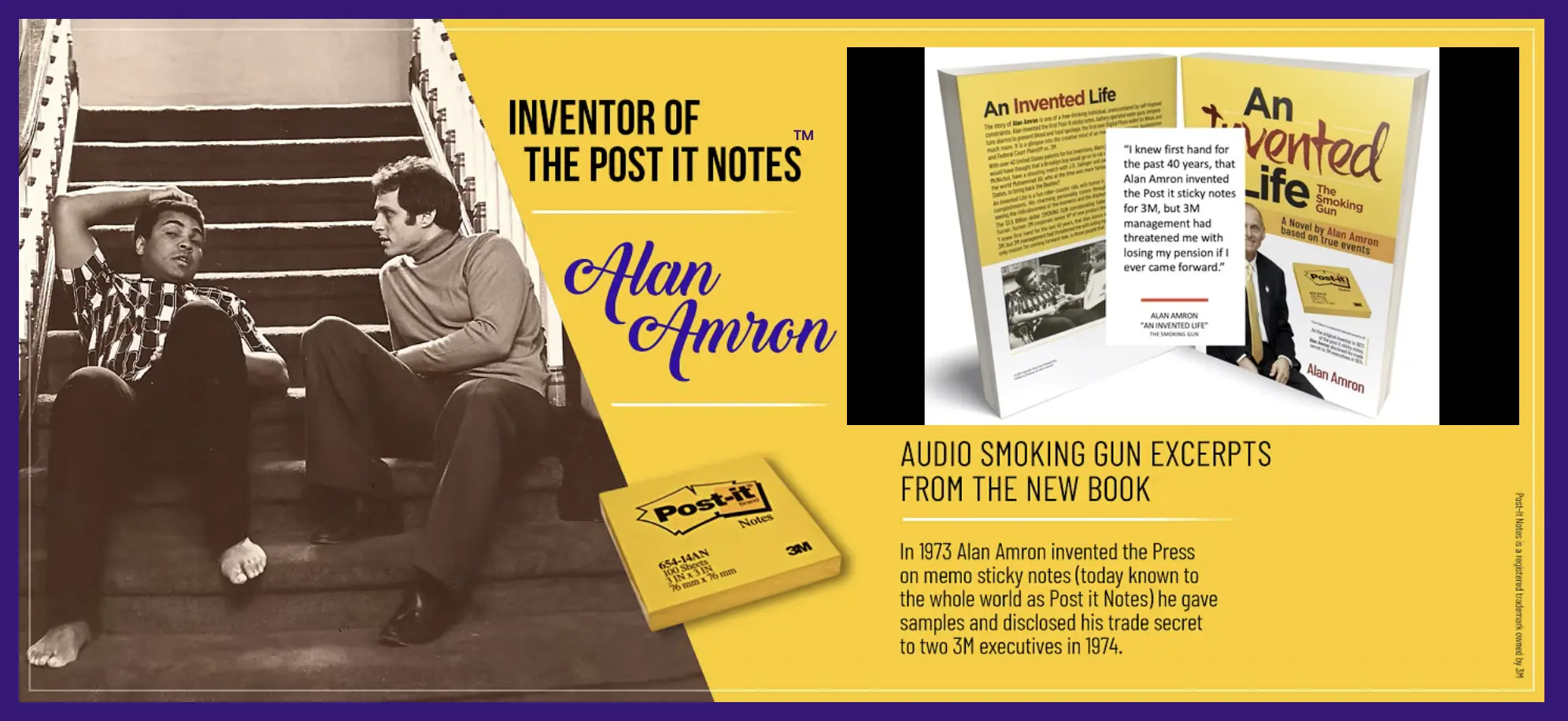
Muhammad Ali And Alan Amron
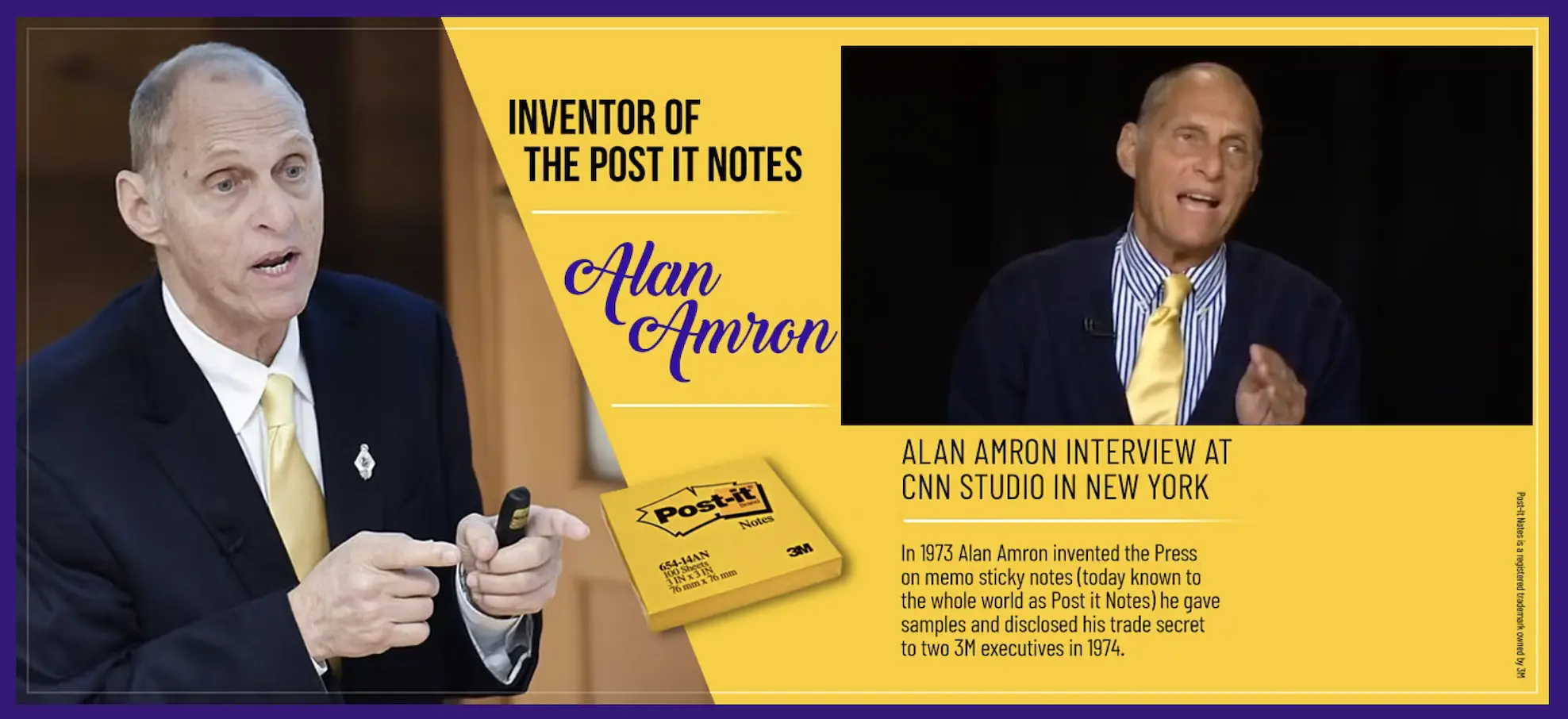
In 1973, discussing Alan's Post-it sticky notes stationery industry invention. In 1974 Alan gave samples of the Press-On Memo to a 3M executive, at an inventors' exhibition in New York.
INVENTOR OF THE POST IT NOTES
Alan Amron
In 1973 Alan Amron invented the Press-On Memo sticky notes known to the whole world as Post-it Notes. In 1974 he gave samples to a 3M executive, at an inventors' exhibition in New York.
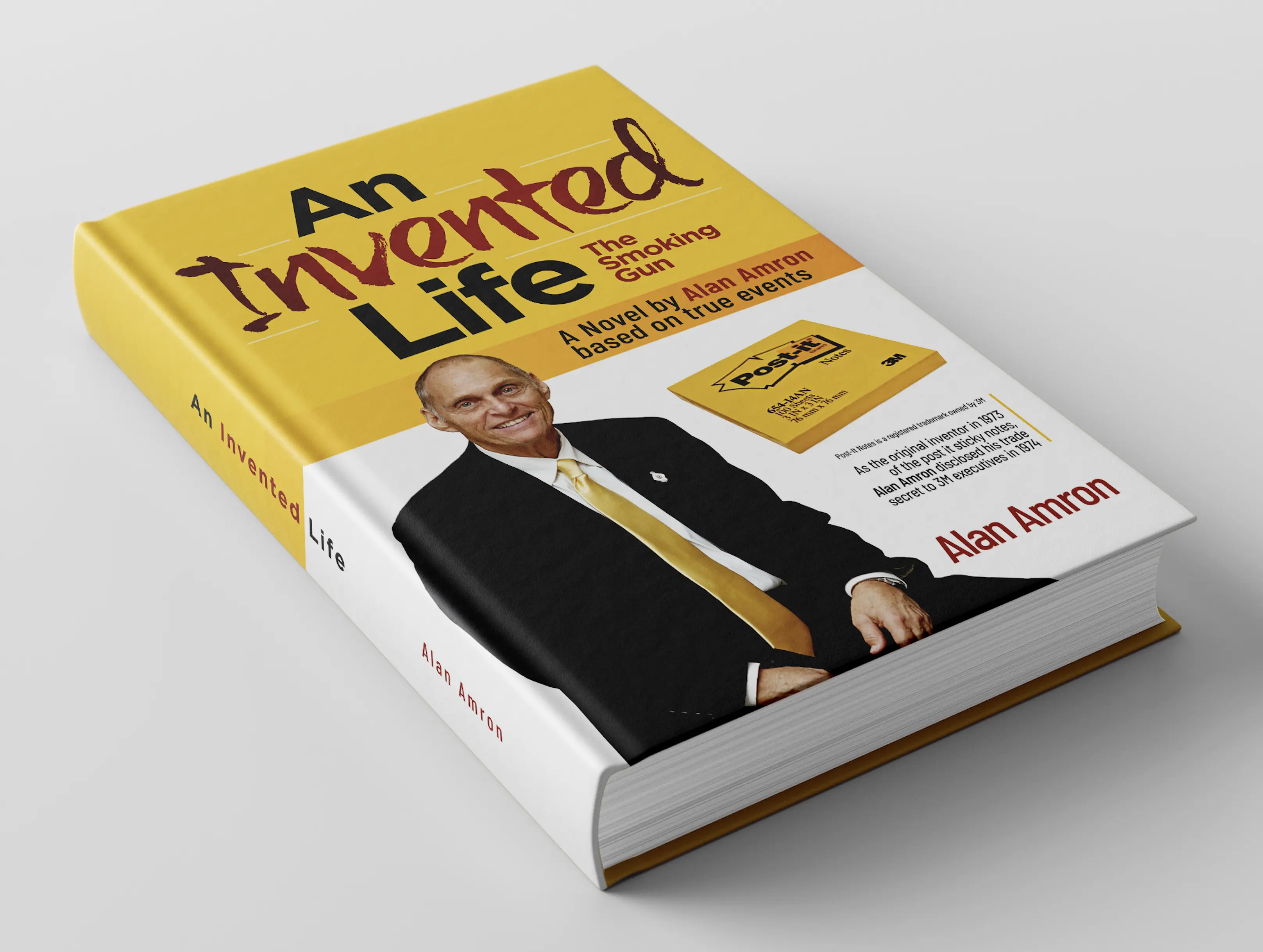
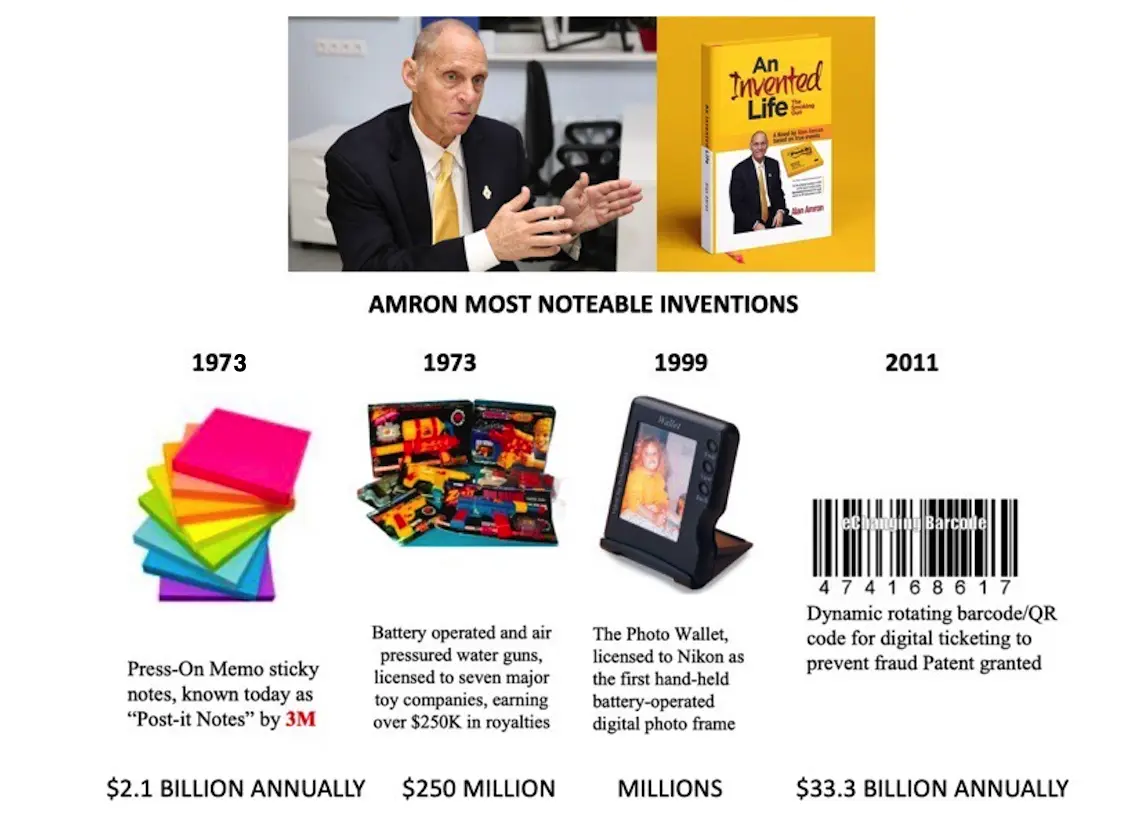
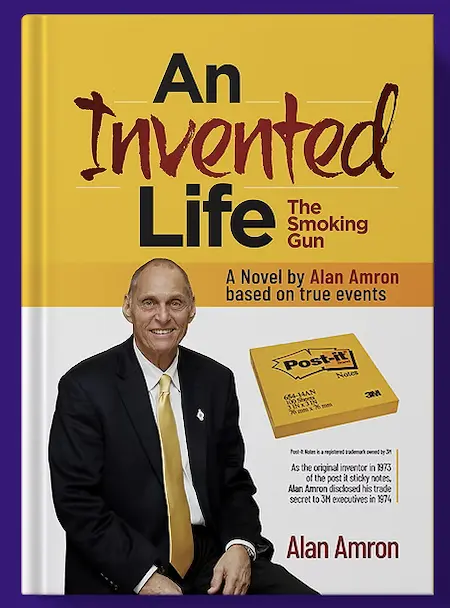
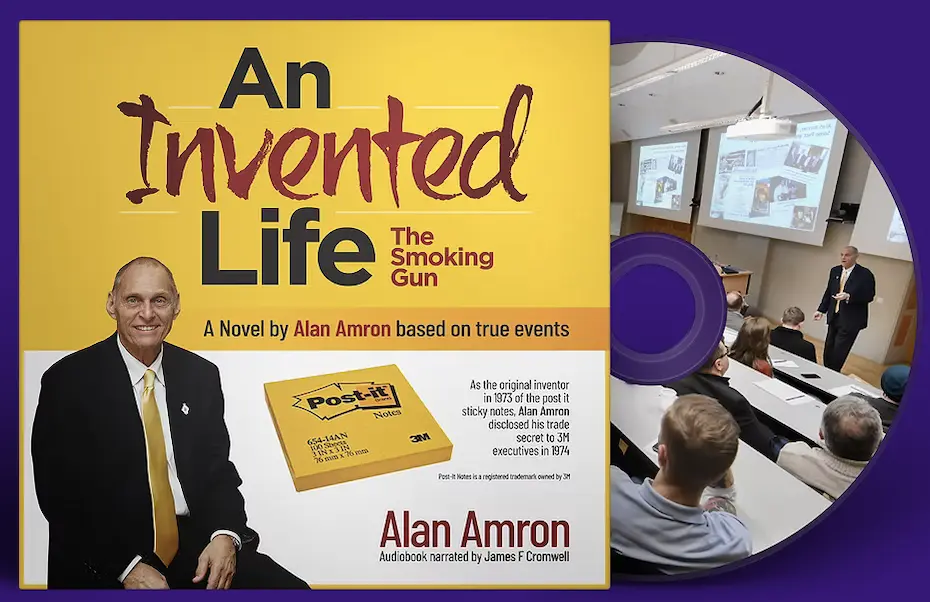
The story of Alan Amron is one of a free-thinking individual, unencumbered by self-imposed constraints. Alan invented the first Post-it sticky notes, battery-operated water guns, temperature alarms to prevent blood and food spoilage, the first-ever Digital Photo wallet for Nikon Camera, and much more. Smoking Gun gives you a glimpse into the creative mind of an inventor, entrepreneur, businessman and Federal Court Plaintiff vs. 3M. With 41 United States patents for his inventions, Alan's journey is truly an inspiration. Who would have thought that a Brooklyn boy would go on to rub shoulders with Frank Sinatra, Kristy McNichol, have a shouting match with J.D. Salinger and partner with the renowned boxing champion Muhammad Ali to bring back the Beatles?
An Invented Life is a fun roller-coaster ride, with humor in Alan's naivety, heartaches and accomplishments. His charming personality comes through in all that he has accomplished, seeing the ridiculousness of the moments and the displays of his natural chutzpah.
In 1973 Alan Amron invented the Press-On Memo sticky notes today known to the whole world as Post-it Notes. In 1974 he gave samples to a 3M executive, at an inventors' exhibition in New York.
About the Author
Alan Amron is a prolific inventor and creator of new, novel, and unique ideas. From products to negotiations, he has had a gift.
His father Herman Amron used to tell his friends, "My son Alan could put his finger in a glass of water, and it would turn into Seltzer." And his father's predictions came true. Today, Alan has 41 United States patents issued. Some of his inventions include the battery-operated water guns for Larami, Blue Box, LJN, Tyco, Buddy L Coleco and Remco toys, Air pressurized water guns for Trendmaster, Bubbles and water sprinkler for Fisher-Price. Of course, let's not forget the Photo wallet for Nikon Camera and the First Down Laser Line for football and the Press-On Memo sticky notes today known to the whole world as Post-it sticky notes by 3M.
UC Berkeley Alan Amron Lecture
University of California, Berkeley
In 1974 I gave samples of my 1973 invention, the Press-On Memo sticky note, to a 3M executive, at an inventors' exhibition in New York.
"This book had me at its cover. I finished it in two days which is a record for me. I am an inventor myself and I recently started an organization called Inventors Rescue, to help independent Inventors avoid scams and bad companies that target and prey on them in many different ways. This book should independent inventors hope and encouragement to not give up when your invention or patent are taken from you, the real inventor. Such an amazing read for inventors that we are adding it to our resources page."
C.Land
Verified Purchase
★★★★★
"A great story about a good man and great inventor with awesome life experiences along the way. As well as many trials and tribulations"
Chris
Verified Purchase
★★★★★
"Indeed, you are the true inventor of the Sticky note. Known today as the 3M Post It Note. Thank you for being such an inspirational example that we can look up to."
Kelly Tong
Verified Purchase
★★★★★
"Well written informative and if you ever invented anything, or know someone who did, this is a must read. Extremely entertaining."
J.G.
Verified Purchase
★★★★★
"I re-read this book again. It was just released on Amazon. Wonderful story, and very helpful life insights. I recommend everyone read or listen to this book. Amazing life and story. Love the ending. It's what Hollywood endings are made of. I recommend this book to anyone who ever invented or created something, or wanted too. Fact and fiction become partners in this great life story. I LOVED IT."
Amazon Customer
Verified Purchase
★★★★★
"Fascinating read. I thought I had a fairly exciting life, but after reading this book, not so much. Alan's life experiences makes me think I never got out of bed...wow, great stories."
Eric HUBER
Verified Purchase
★★★★★
"This is cool stuff. I've always had ideas for products and never really did much about it. Alan Amron is an inventor that sounds like a go getter for sure. Its great to hear how innovative people have gotten products to the market and overcome obstacles along the way. Fun read!"
ILOVELASERS
Verified Purchase
★★★★★
"If you're an inventor or ever thought of inventing, this book is a must. It's a unique story of an inventor (Alan Amron) who continuously tries to get his ideas and inventions off the ground and out into the world in order to solve problems. During his journey, Alan also weaves in his unintended ability to manage actors and the ins and outs of being in Hollywood."
DMA
Verified Purchase
★★★★★
"This is David vs Goliath, how does one man go up against a giant corporation and finally get justice? Tenacity and imagination required, go along for the crazy ride."
Gman
Verified Purchase
★★★★★
"Just finished the book and all I can say is WOW!!! I heard a few of these stories first hand from Alan years ago, but that only scratched the surface. What an amazing life of inventions and adventures! I'd say more, but you wouldn't believe me without reading it for yourself!"
Jason Hill
Verified Purchase
★★★★★
"Hey Alan, I just finished your book and I have to say that's quite the life you have lived! After reading your book I realized that I only heard a tiny portion of those stories in the time we spent together. I will end with a quote from the late Bruce Lee – 'The key to immortality is first living a life worth remembering.' You are now truly immortal my friend!!!"
Jason Hill
Verified Purchase
★★★★★
"I never knew the invention of post it's was contested or heard your side of the story. Thanks for what you did (even if credit not given by 3M), we all use them all the time!"
Jon Roth
Verified Purchase
★★★★★
"You gotta get this book, the information and stories are over and above worth the read...."
Carmine Denisco
Verified Purchase
★★★★★
"Great Story, I Recommend This Book. I was inspired from all my life and never understood why my dad never got the credit he deserved after going through everything since the first trials. Quick Read - Must See Situation"
Canadian Brothers - Inc.
Verified Purchase
IN SUMMARY:
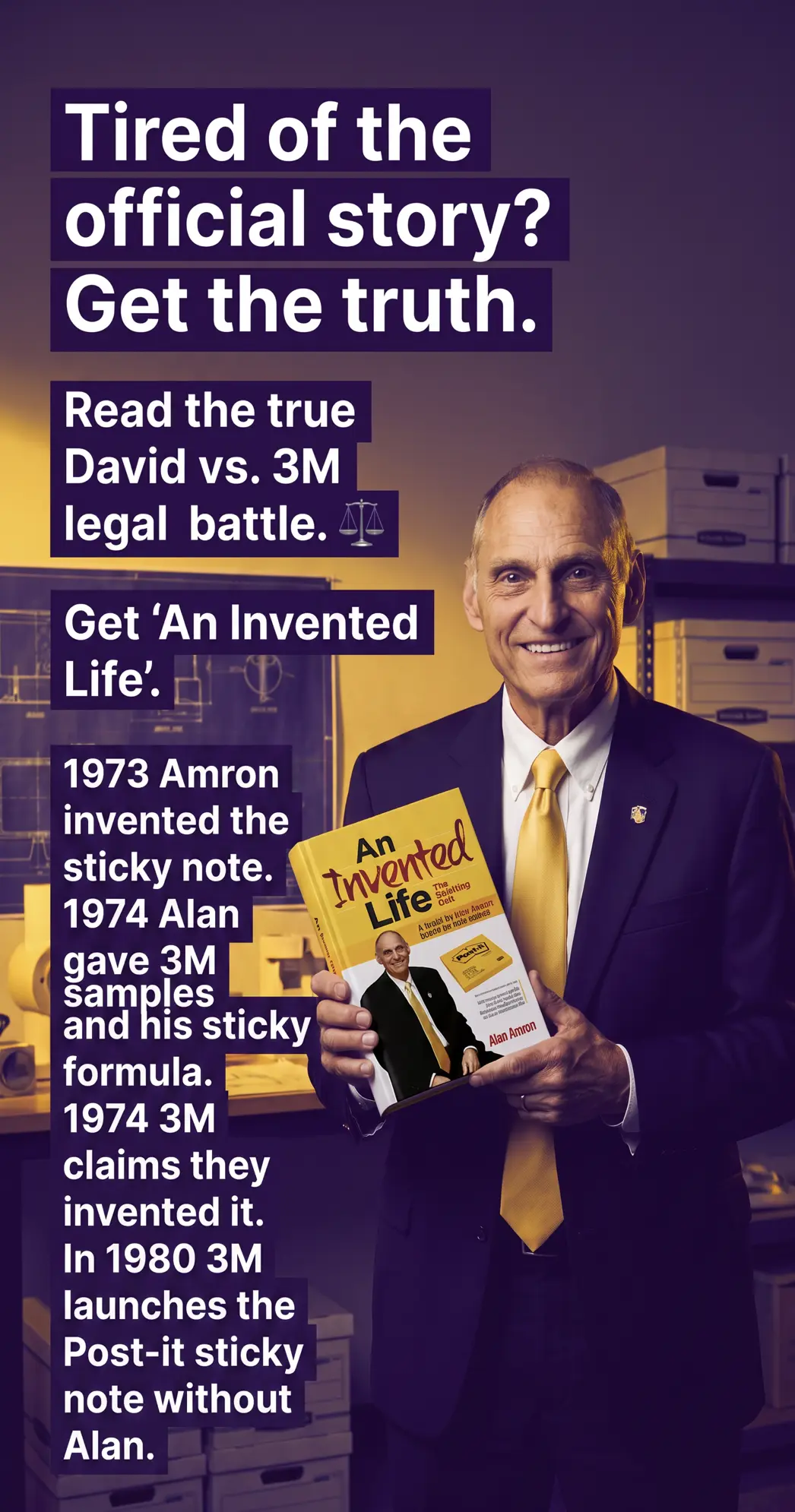
In 1973 Alan Amron invented the sticky backed note he called Press-On Memo.
In 1974 Alan Amron put his sticky backed note called Press-On Memo into commerce, and gave samples to a 3M executive at an inventors' exhibition in New York.
In 1974, by 3M's own account, Arthur Fry thought of using Spencer Silver's adhesive to make a bookmark that would stay put in his church hymnal.
In 1977 3M introduced the sticky backed note as Press n' peel.
In 1980 3M renamed the very same sticky backed note product they first called Press n' peel, as Post-it note.